Technology

The phenomenon of ablation

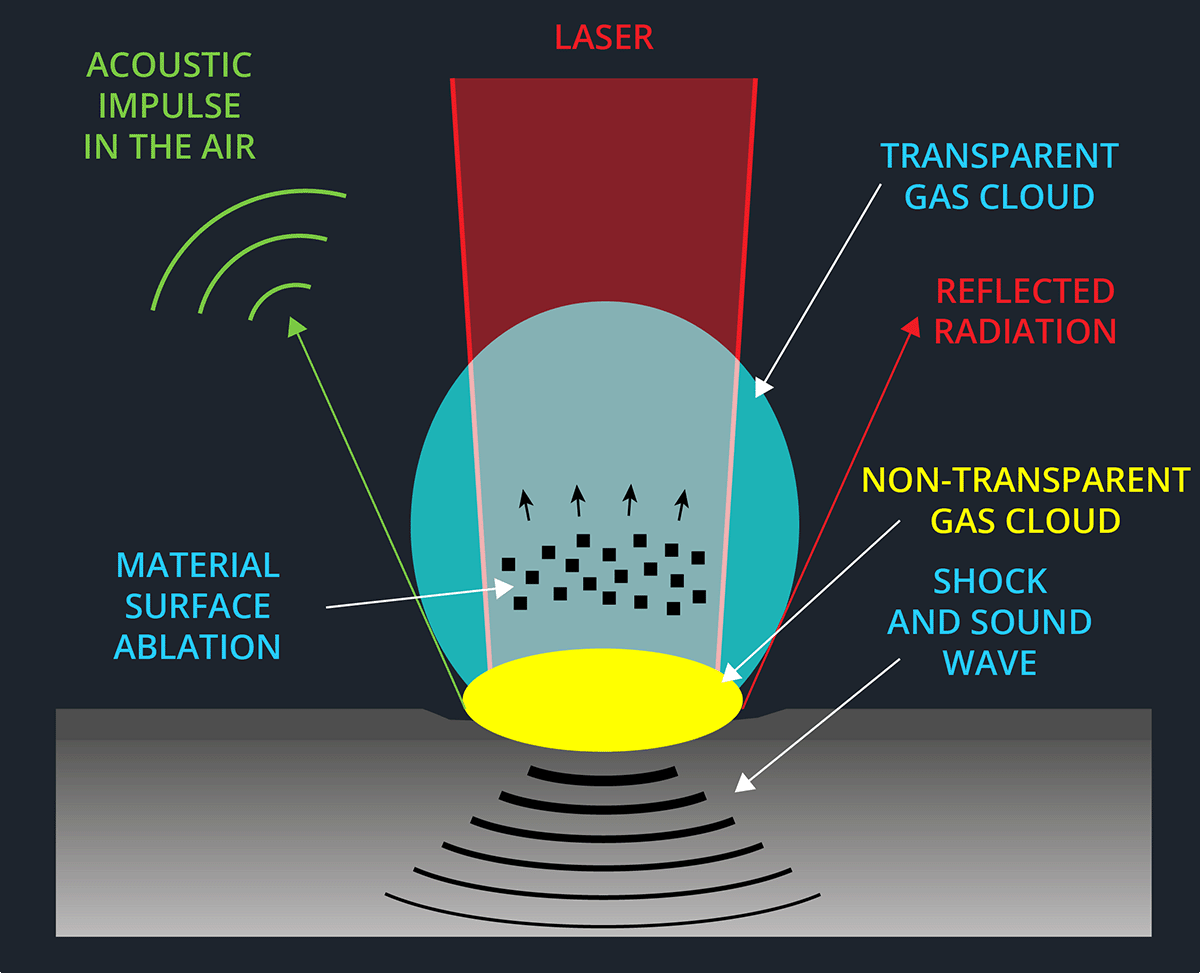
The laser cleaning process is closely related to the so-called laser ablation phenomenon, i.e. breaking the bonds of atoms with a focused beam of light. This phenomenon causes the transition of a solid to a gas or plasma state, omitting the liquid state.

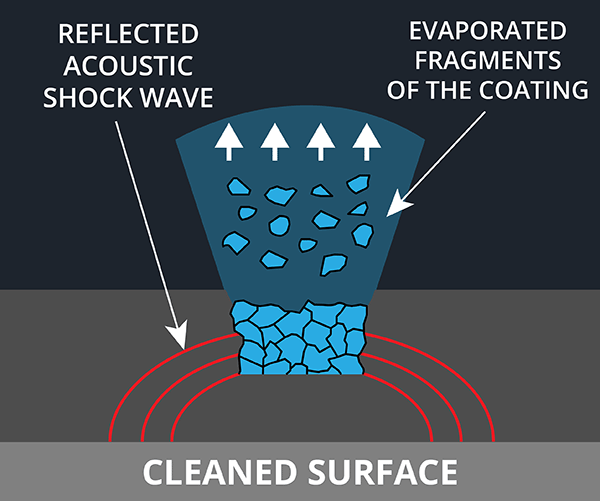
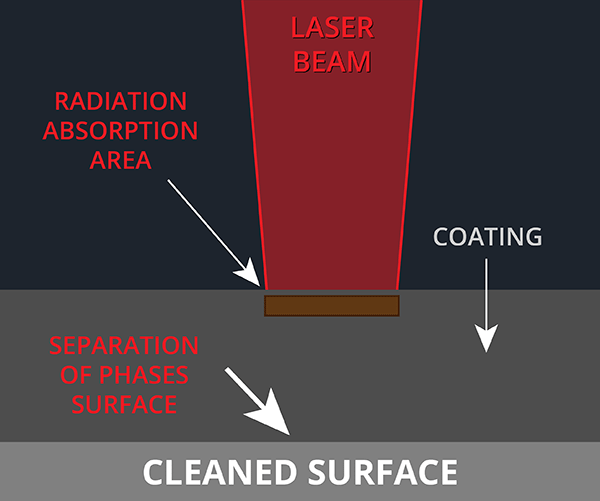
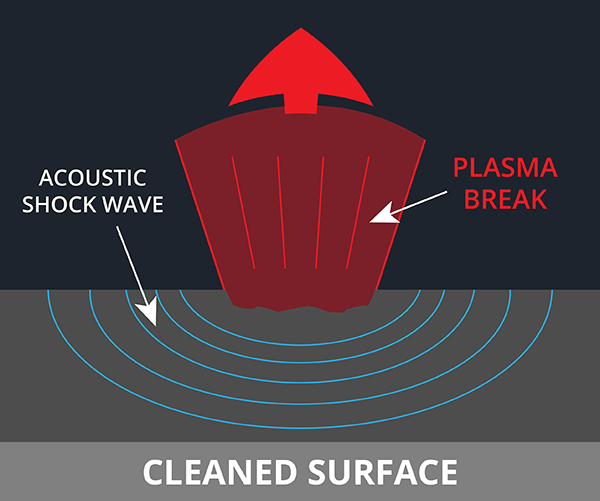
The laser beam consists of thousands of photons that hit the cleaned surface. Each photon collides with the surface of the coating, which causes the excitation of individual atoms, which, by colliding with each other, increase the temperature and thus the energy. When the energy generated in this way exceeds the critical threshold, the connections between the shell atoms are broken. Then the phenomenon of sublimation occurs, i.e. the transition of broken structures from a solid state to a gaseous state or to a plasma. Additionally, an acoustic wave is generated during the evaporation of the coating. It moves towards the substrate, but after reflection from the boundary between it and the layer of contaminants, it changes its direction and additionally helps in the floating of particles into the air.
The phenomenon of ablation in details
The main advantage of laser cleaning is the lack of invasiveness in the structure of the cleaned material. With the appropriate laser parameters, it is possible to safely and, primarily, precisely remove contaminants from almost any surface without changing its structure. Adjusting the laser power makes it possible to increase efficiency, and therefore quickly clean the surface, which does not require additional preparations. This technology is most often used to clean the surface of metal alloys from rust, grease or paint, but it also works great in such delicate materials as wood or antique stone frescoes. The size of the cleaned objects is also not a limitation, because by properly setting the laser beam width, we are able to precise clean of even small elements.
An additional advantage of this innovative cleaning method is its eco-friendliness. During laser cleaning, no additional chemicals or abrasives are used, and the resulting vapors from the removed coating are absorbed by professional exhausts and utilized. Due to the high efficiency and fast cleaning rate, the cleaning laser also consumes an incomparably smaller amount of electricity compared to classic cleaning methods.